Skip to content


Table of Contents
If you have been skipping earrings for years or angling every photo so one ear stays out of frame, you know how much attention a small thing can take up. For most people, the hesitation comes down to one word: surgery.
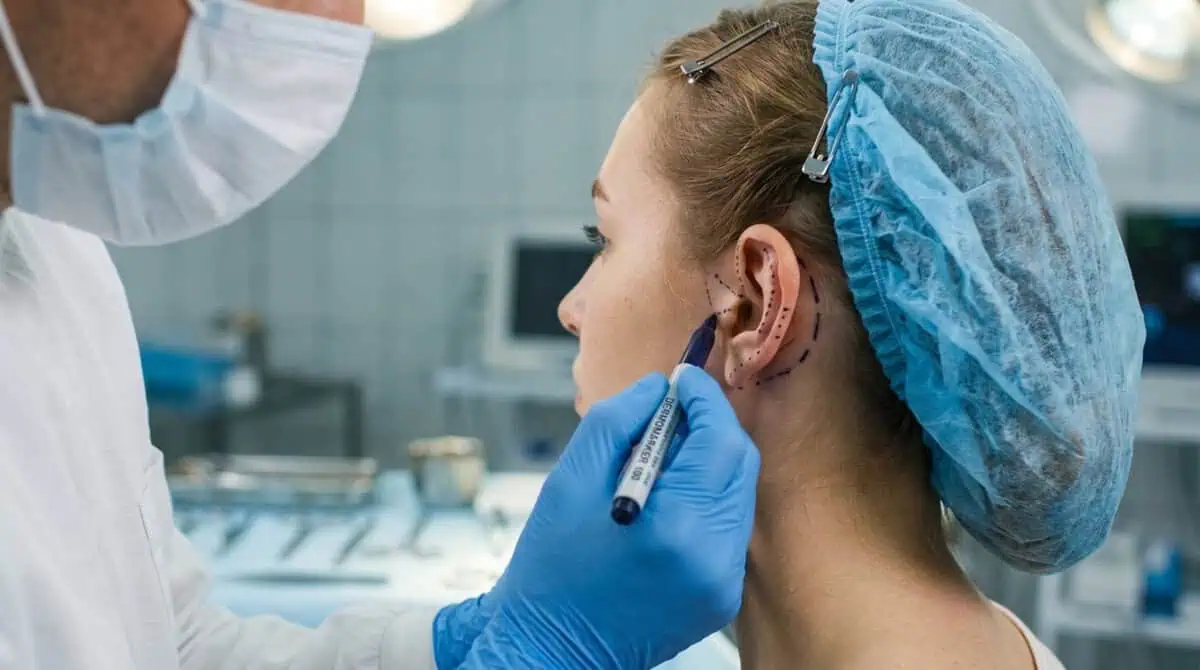
At Layton Aesthetic Plastic Surgery in Kerrville and Houston, TX, earlobe repair is a minor, in-office procedure performed under local anesthesia, not an operating-room procedure. Most patients complete the repair and head home the same day with minimal downtime.
How a Torn Earlobe Is Actually Repaired
Most torn earlobes are repaired in the office under local anesthesia, which means no general anesthesia and no hospital or surgical facility. Minor here describes something specific: numbing medication, a short appointment, and walking out on your own afterward.
To be honest: this is still a surgical repair, just a small, contained one. We trim and stitch the tissue, which is why the result holds. Torn earlobe repair at Layton Aesthetic Plastic Surgery can address split lobes, elongated piercing holes, and lobes stretched by gauging, on one ear or both.
Why Earlobes Tear, Stretch, or Split
Earlobes tear and stretch for a few common reasons, and almost none of them are anyone’s fault. The lobe is soft tissue with no cartilage supporting it, so it gives way under steady pull.
- Heavy or dangly earrings worn over years, which slowly elongate the piercing hole until it sits low and thin
- A sudden pull, like an earring caught on a sweater or a seatbelt, which can split the lobe in one motion
- Gauged and stretched piercings that shrink after the jewelry comes out but never fully close
- Genetics and natural thinning of the lobe over time, which makes tearing more likely even with light earrings
What Happens During an In-Office Earlobe Repair
The procedure is short and performed with you awake and comfortable. The lobe is numbed with a local anesthetic first, which is the step most patients dread and the one they later call the easiest.
Once the area is numb, we trim the healed edges of the tear to create fresh tissue to bring together, then remove excess skin to restore the lobe’s shape and size. We then place fine sutures to close the repair, deliberately positioned to keep scarring minimal and in a less noticeable area. For patients already living with a noticeable scar from an older injury or procedure, our practice offers scar revision as a separate service.
Where Non-Surgical Options Help, and Where They Stop
Non-surgical options exist, but they solve a different problem than a tear. Dermal filler can add volume to a thinned or deflated lobe and support a drooping earring so it sits upright. For lobes that have simply lost fullness with age, that can be a reasonable option.
Filler can’t close a tear. Once the tissue has fully separated, as in a split lobe or a hole stretched well past its original size, nothing injected into the lobe can bring those edges back together. That takes stretched earlobe repair or a full repair of the split.
Recovery and When You Can Wear Earrings Again
Earlobe repair recovery is usually uneventful, which is the best thing you can say about a recovery. A thin layer of antibiotic ointment is typically the only dressing needed, and a little drainage in the first days is normal.
Sutures are generally removed about a week after the procedure, and most patients get back to their normal routine right away. The lobe usually heals in about one to two weeks. Re-piercing is typically done around eight weeks out, and the new placement sits away from the repair so the lobe has solid tissue around it and is less likely to tear again.
Is Earlobe Repair Right for You?
Good candidates for earlobe repair surgery are patients in good general health with meaningful tearing, splitting, or stretching from piercings, heavy earrings, or gauges, who hold realistic expectations. Genetically affected lobes can be addressed as well.
Results tend to last when the lobe is protected afterward, though individual results vary. Complications are uncommon, and during your consultation, Dr. Layton reviews the ones worth knowing about, including infection or slight asymmetry. Protecting it later is simple: lighter earrings, posts over heavy drops, and earrings out at night.
Common Questions About Torn Earlobe Repair
Does earlobe repair hurt?
The lobe is fully numbed with local anesthetic before anything begins, so most patients feel pressure rather than pain during the repair. Discomfort afterward is typically mild.
Will there be a visible scar?
Sutures are placed along the lobe’s natural line to keep scarring minimal and discreet. Most patients find the repair difficult to spot once it has healed.
Can I get my ears re-pierced afterward?
Yes, typically around eight weeks after the procedure. Placement matters, so we position the new piercing away from the repair rather than through it.
Can both ears be done at once?
Yes. One or both lobes can be treated in the same visit.
Your Earrings Have Waited Long Enough
So the answer is yes. We correct a torn or stretched lobe in the office under local anesthesia, in a single visit, and most patients head home the same day and resume normal activity right away. Recovery is measured in days, not months.
The reasonable next step is not deciding on the procedure. It is letting someone look at the lobe itself, because an elongated hole and a fully split lobe are handled a little differently, and that is easier to see in person. A consultation is a short conversation, and you are free to leave it at that.
If you are done working around it, earlobe repair in Texas is available at both locations. Schedule an Earlobe Repair consultation with Dr. Ernest Layton at Layton Aesthetic Plastic Surgery in Kerrville or Houston.